Got any questions?
Get in touch with Cambridgeshire and Peterborough strategic partnership lead, Cleo Weeden, at VivaCity

Welcome to the VivaCity portal! We’ve been working with the Greater Cambridge Partnership, the Cambridgeshire and Peterborough Combined Authority, and Cambridgeshire County Council on the deployment of AI computer-vision sensors to support the collection of movement data, for road safety monitoring and signal control solutions.
In this portal, you can learn how teams within the three partner councils are deploying the sensors to gather new scheme insights, where the sensors are located, how you can access and use the data being collected, how to draw intelligence and insight from VivaCity data, and how you can procure sensors for your own projects.
The microsite also sets out how third party organisations can begin their journey to deploy Vivacity sensors and become part of a wider effort to gather accurate, timely movement data.
Powered by advanced AI computer vision, VivaCity sensors provide highly accurate multimodal transport data. Outperforming traditional monitoring technology, data is easy to access, secure and comprehensive, offering insights into movements, speeds, turning behaviours, near miss incidents, traffic flow and more. The sensors detect up to 9 road user classes including peds, cyclists, e-scooters, cars, buses, vans, motorbikes, HGV1 and HGV2.
Privacy by design: VivaCity sensors are designed to provide accurate data on road usage statistics in a completely anonymous way. The system was developed using protection-by-design principles and is fully compliant with GDPR. The data collected is processed and discarded on edge - videos and images that are available on the dashboard are blurred. So no personal data is available, and the data is never allowed to be used for enforcement purposes.
Data security: the sensor software and memory is encrypted and all communication to and from the sensor is encrypted using industry standard HTTPs TLS1.3 security.
Validation work has been undertaken by Cambridgeshire County Council on the VivaCity 2nd generation sensors (V2) and can be viewed via the Vivacity Sensor Validation Exercise: June 2022.
If your team is part of the GCP, the CPCA or CCC and has a requirement to monitor movement, road safety, or is interested in multimodal data for signal control optimisation, VivaCity sensors can easily be bought from the procurement framework that has been created by the partner organisations. For more information follow this link???.
If you are an external body interested in buying sensors and becoming part of the overall sensing network, please get in contact with Smart Cambridge???
If you would like to access data from the existing network, CCC have created a dashboard of aggregated data which can be accessed here: Cambridgeshire & Peterborough Insight – Roads, Transport and Active Travel – Traffic Flows – Traffic Flows Dashboard
If you require the raw data, this can be accessed via an API from a data platform managed by the Greater Cambridge Partnership and operated by Alchera. For more information please contact (Smart Cambridge???). The Alchera platform has been integrated with Power BI and other tools to help users of VivaCity data create dashboards of the data.

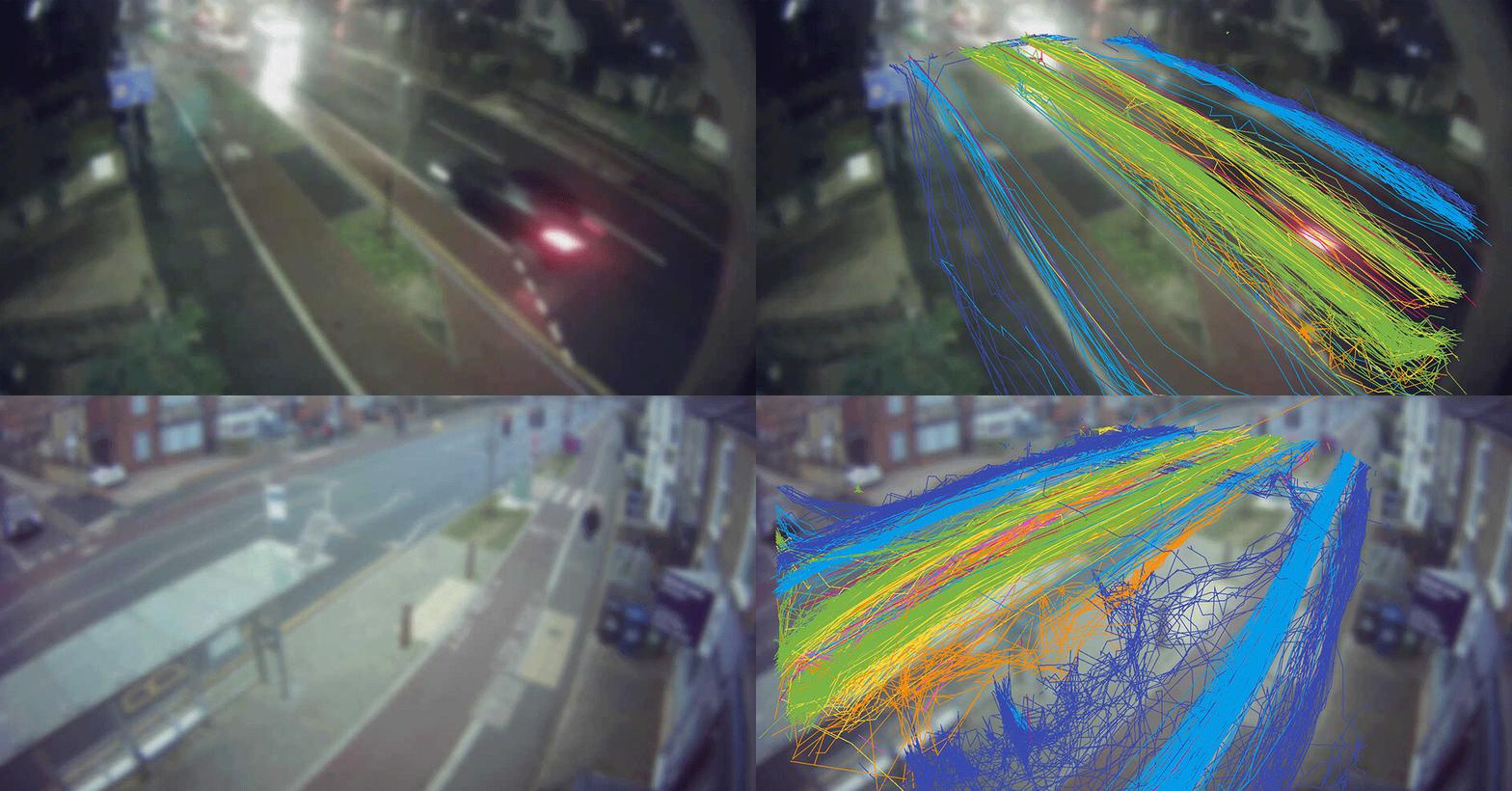
VivaCity sensors collecting data and insights on active travel corridor on Milton road, Cambridge. The coloured lines are the tracks feature, each colour representing a road user mode (pedestrian, cyclists, cars, etc), showing their trajectory, useful for instance to assess cyclist adherence using segregated lanes.
The GCP builds in monitoring and evaluation into every project, to understand the impacts that city deal investments have. An example is the Milton Road cycling and walking scheme.
VivaCity sensors were deployed before the works were started to create a baseline and have been monitoring throughout construction and post completion. The sensors have helped GCP to understand the impact the project has had on walking and cycling as well as understanding the impact on traffic flows.

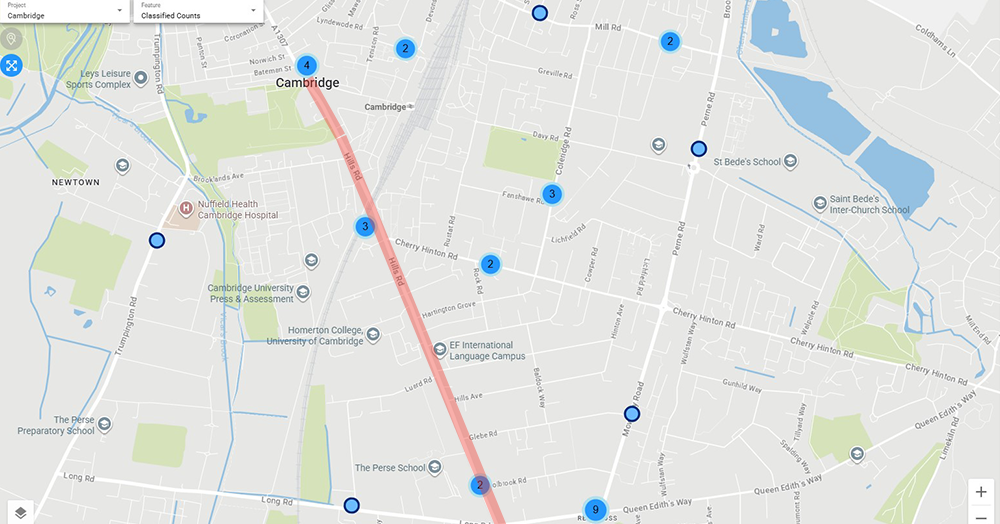
VivaCity sensors (blue dots) monitoring cyclist volumes and collecting near miss data to assess cyclist safety at this UK-first Dutch style roundabout.
The UK’s first ‘Dutch Style’ roundabout was built at the junction of Fendon Road, Mowbray Road, and Queen Edith’s Way. It was critical that the County Council’s cycling team collect data on the impact that this had on cycling journeys, traffic movements and safety.
VivaCity sensors were placed on locations on roads around the roundabout and collected count data and recorded near misses, to complement other incident data. This data helped the team understand the effectiveness of the scheme and build evidence for future deployments.

VivaCity Smart Junction pilot has taken place in Cambridge city centre (Hill Road highlighted in red), testing how AI-powered computer vision technology can be used to optimise traffic signals, reducing journey times and improving active travel flow.
The GCP and CCC undertook a Smart Signal Control pilot that compared VivaCity sensors and their emerging optimiser technology against existing detection and optimisation technologies such as MOVA.
The Smart Junction trial, conducted around Cambridge city centre, along a connector corridor across Hills Road/Brooklands Ave/Cherry Hinton Road and at the edge of the city at the junction of Cherry Hinton/Queen Edith’s Way. The trial assessed various detection and optimisation technologies with the goal of improving journey times and prioritising different road users at specific times of the day.
The technologies compared included induction loops and VivaCity Sensors for detection, and VA (Vehicle Actuation), MOVA (Microprocessor Optimised Vehicle Actuation), SCOOT (Split Cycle Offset Optimisation Technique) and VivaCity’s ‘Smart Junction’ Optimiser for optimisation.
Data collected during the trial was analysed to evaluate the detector and optimiser effectiveness. The results showcased significant benefits for VivaCity’s sensors including cost, ease of installation, detection of a broad range of classes and the variety of different data types (counts, speed etc.) that could be fed into an optimiser. For the optimiser, there was an incremental localised benefit in journey time reduction (1%) and a larger benefit for pedestrians when they were prioritised with accurate crowd detection (30% decrease in dwell times).

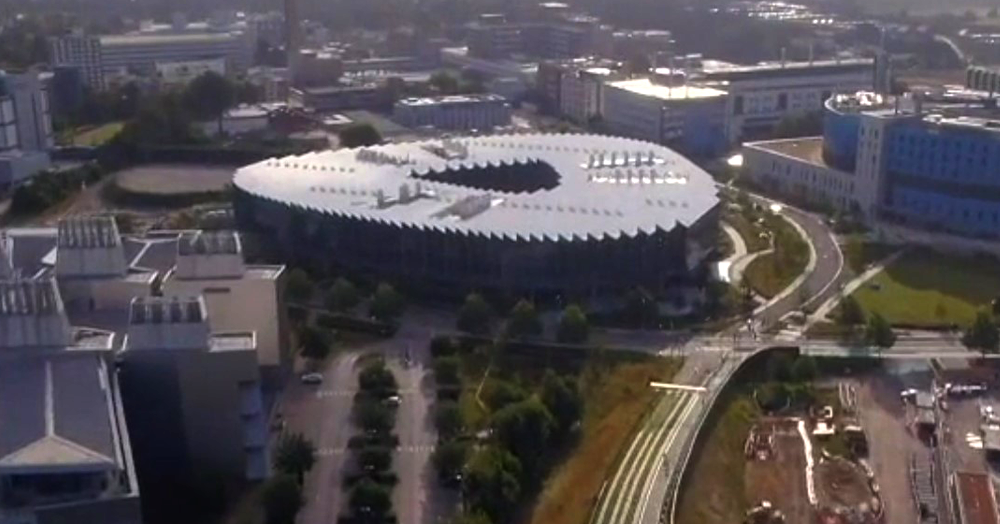
VivaCity sensors are collecting multimodal data at the Cambridge BioMedical Campus to understand movement of employees, patients and visitors on, off and around the campus.
The Cambridge BioMedical Campus is the UK’s and Europe’s leading life sciences cluster. The campus is the largest employment site in Cambridge, supporting over 22,000 jobs and is the home of three hospitals. One of their biggest challenges is how to get employees, patients and visitors on and off the campus.
To support their work on the transport challenge, they needed to understand movement both on, off and around the campus. They have recently been through a procurement process and will be working with VivaCity on the deployment of a network of sensors. It has been agreed that data will be shared between the CBC and the partners in the Cambridgeshire and Peterborough network as value can be added to each party by having a greater understanding of transport movements across the city.
Get accurate, real-time data from your transport schemes. VivaCity's dashboard provides multimodal traffic monitoring data, predictive road safety insights, customisable reporting options, and much more.
You can also buy VivaCity sensors to support your schemes with high-quality, multimodal data for smart traffic monitoring, to better manage road safety initiatives, and optimise traffic signals with the most advanced detection system in the market.
Send us a message and we'll get back to you shortly.
.png)
.png?width=150&height=101&name=Bike_Gradient%20(1).png)
Increase the use of public transport, cycling, and walking, reducing reliance on cars

Enhancing the quality, accessibility, and affordability of public transport

Supporting economic development by improving transport connectivity across the region

Something Cambridge Specific???
(TfGM aims to develop the "Bee Network", a fully integrated transport system enabling seamless connections between buses, trams, cycling and walking routes)

Enhancing the safety of all transport modes, minimising road traffic accidents, and ensuring the reliability of public transport services
Get in touch with Cambridgeshire and Peterborough strategic partnership lead, Cleo Weeden, at VivaCity